


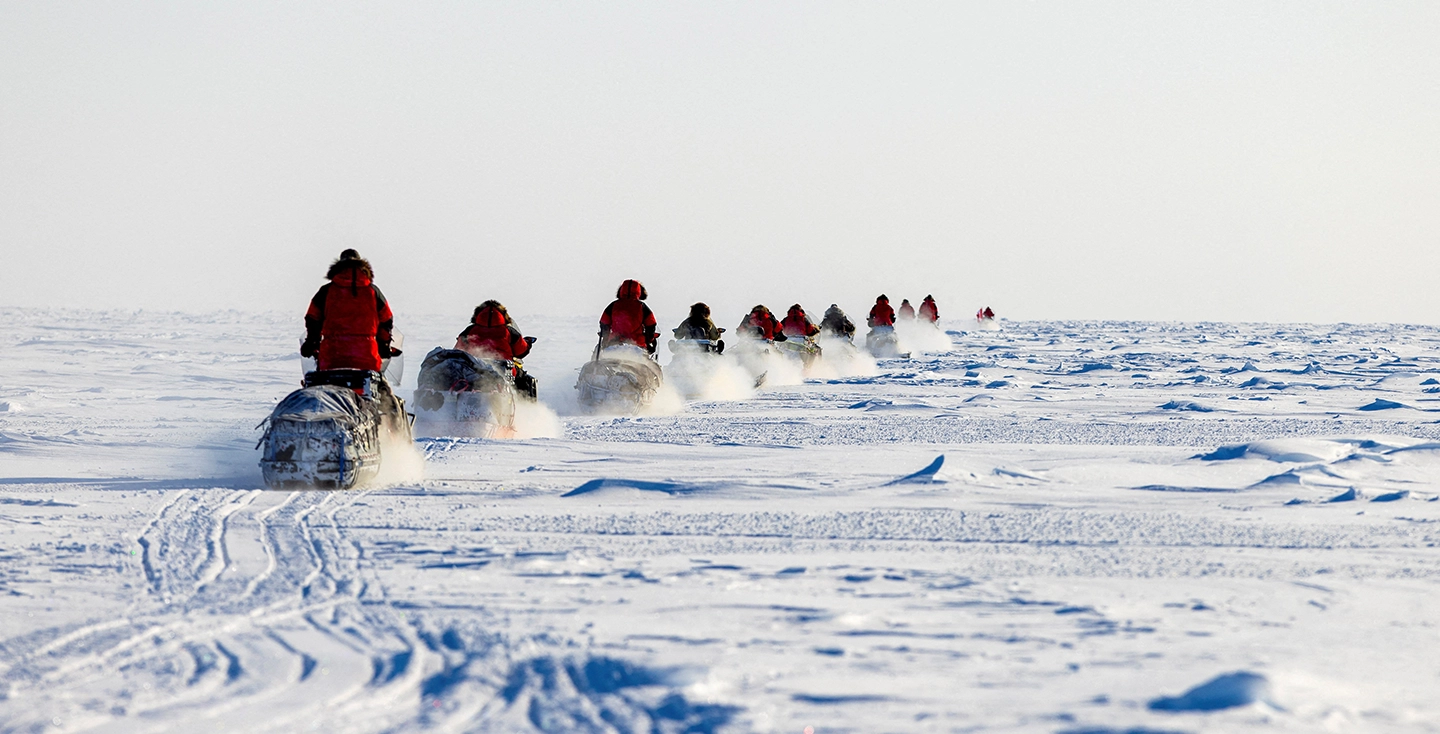
Canada has launched a months-long military operation in the Arctic that will bring its forces together with three NATO Allies, reinforcing the Alliance’s ability to monitor and operate across an increasingly important northern region.
Operation Nanook-Tuugaalik will run from August through October and focus on maintaining a maritime presence, improving regional awareness and strengthening the Canadian Armed Forces’ ability to operate in remote northern environments, the Canadian Department of National Defence said in August 2026.
“For our ships, crews, and Allies, Tuugaalik is about spending time where it matters most: on the water, in the Arctic, exercising together to build familiarity with the region and maintaining awareness at sea,” said Royal Canadian Navy Cmdr. Brian Henwood, commanding officer, HMCS Robert Hampton Gray and Task Force Commander, according to a Canadian Department of National Defence news release. “Every patrol deepens our understanding of the operating environment, our capabilities and strengthens the relationships we have with communities and partners across the North.”
Canadian officials have also noted that Russia remains a “formidable force” in the Arctic, where the Kremlin reportedly has dozens of permanent bases while Canada has none, the BBC reported.
“They still fly, and they still probe” in the region, Brig Gen Daniel Rivière, commander of the army task force responsible for Operation Nanook-Nunalivut, told the BBC in April 2026, noting that Russia and the Chinese Communist Party have increased joint exercises in international waters. “Is that an immediate threat? No. But are they getting smarter about Arctic waters? Absolutely.”
Operation Nanook-Tuugaalik will center on HMCS Robert Hampton Gray, which will operate alongside the Canadian Coast Guard, other Canadian government departments and naval forces from Denmark, France and the United States. Participating forces will transit waters of the Canadian Arctic Archipelago while conducting patrols, surveillance, community engagement and refueling activities.
Although Canada leads the operation, allied participation gives it significance beyond a national sovereignty mission. It allows NATO members to practice communicating, sustaining forces and building a common operating picture in a region where distance, weather and limited infrastructure can complicate military operations.
Operation Nanook-Tuugaalik also demonstrates how Canada is placing its national Arctic defense efforts within NATO’s expanding regional posture. Canadian officials said the operation will coordinate with NATO activities, including Arctic Sentry, an enhanced vigilance activity supporting the Alliance’s deterrence and defense efforts.
“These operations strengthen how we integrate, communicate and respond together at sea — capabilities that are essential to Canada’s defense and to allied security in the Arctic,” Royal Canadian Navy Rear Adm. Pascal Belhumeur, commander, Maritime Forces Atlantic, said, according to the Canadian Department of National Defence.
The linkage matters because effective deterrence requires more than declaring that the Alliance can defend its northern approaches. NATO members must demonstrate that their forces can deploy to the region, remain there and operate together under demanding conditions.
Canada brings geography, permanent military infrastructure and operational experience in the Arctic. Denmark, France and the United States contribute additional forces and capabilities while gaining experience in an operating environment central to Canadian and NATO security. Their participation also helps the Alliance improve shared maritime awareness and interoperability.
The deployment forms part of Canada’s broader Operation Nanook series, which includes several activities conducted throughout the year. Together, those operations support what the department describes as a near-persistent Canadian military presence in the Arctic and North.
That sustained activity strengthens Canada’s ability to detect and understand developments across its northern maritime approaches. It also provides Allies with opportunities to learn the region, improve coordination and develop the practical relationships required during a crisis.
For NATO, the operation supports a larger effort to reinforce collective security across the Alliance’s northern flank. Maritime awareness in the Arctic affects not only Canadian sovereignty but also the protection of allied territory, northern sea routes and the approaches connecting North America and Europe.
Officials say Operation Nanook-Tuugaalik represents more than a seasonal Arctic patrol. It shows Canada leaning further into NATO as the framework for northern deterrence and defense while giving allied forces repeated opportunities to operate together where their presence may matter most. By combining Canada’s regional expertise with multinational forces and NATO’s wider Arctic posture, the operation turns allied commitments into visible military activity, strengthening the Alliance’s ability to recognize, deter and respond to emerging challenges in the High North.