


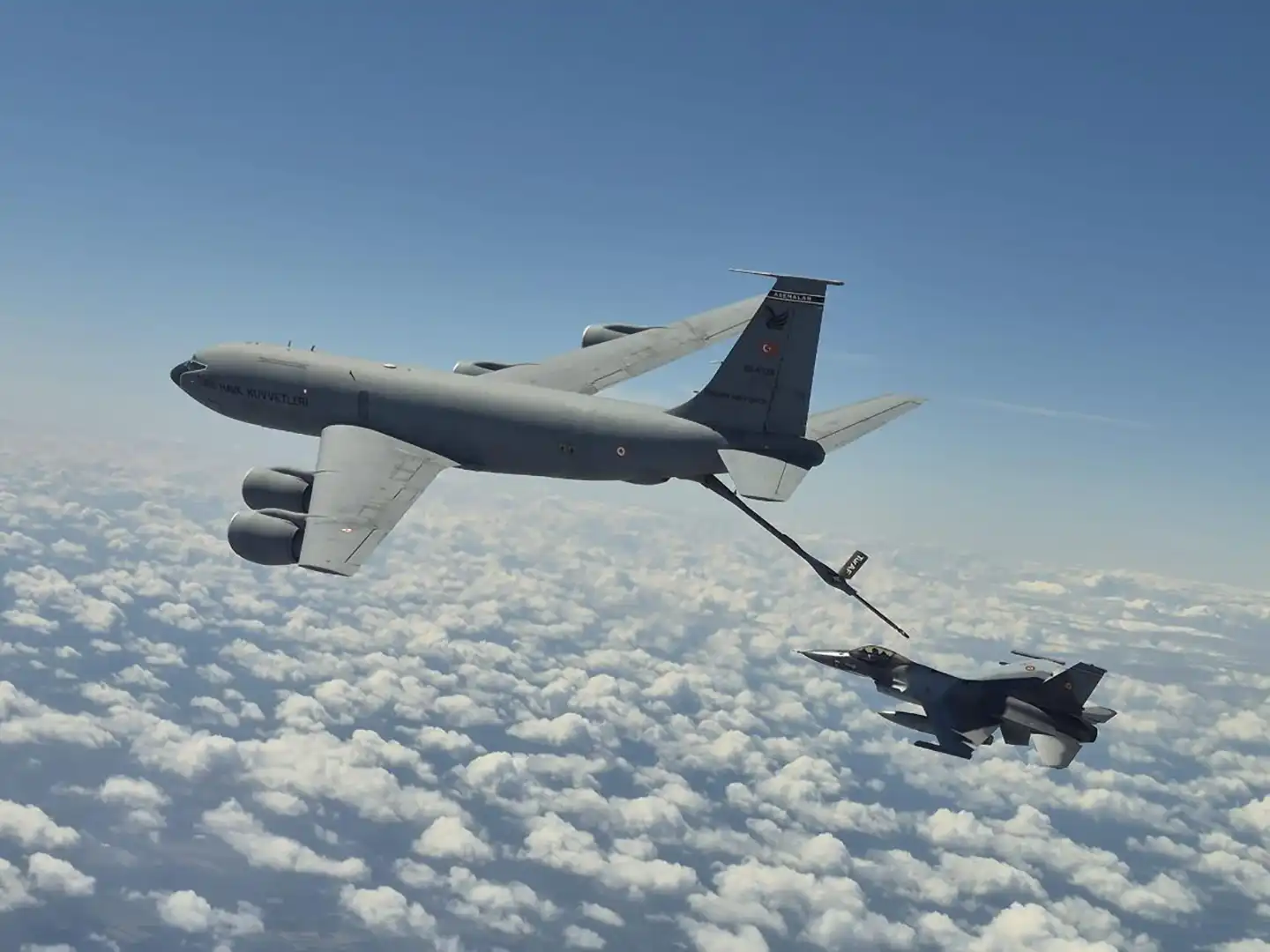
NATO has upgraded its air-policing activities in three Baltic states to include air defense. The Alliance agreed to the changes to its Baltic Air Policing mission for Estonia, Latvia and Lithuania during the July 2026 NATO summit in Ankara, Türkiye. The shift aims to provide a more flexible approach to maintaining security over NATO’s eastern flank in nations that do not operate their own fighter jets. It also gives pilots a wider mandate, including destroying “objects that pose a threat,” Lithuanian President Gitanas Nauseda said, according to a Reuters report.
Under the agreement, NATO aircraft identify and escort Russian military planes flying near the three nations. In recent months, forces have shot down several drones over Estonia and Latvia.
In 2004, Baltic Air Policing was established after Estonia, Latvia and Lithuania joined the Alliance. NATO members take turns deploying to air bases at Ämari, Estonia, and Šiauliai, Lithuania, on a four-month rotational basis, ready to deploy by the Alliance’s Combined Air Operations Centre Uedem, Germany, if required, according to NATO’s website. The Air Forces of Estonia, Latvia and Lithuania contribute to the mission with host nation support for air command and control infrastructure and personnel. Air surveillance radars, surface-based air defense systems and ballistic missile defenses support patrols. The responsibility rotates every four months.
NATO Air Policing has operated for more than 60 years. In addition to Baltic Air Policing, the Alliance has four additional air-policing missions:
- Since 2008, Allies have periodically deployed fighter aircraft to Iceland’s Keflavík Air Base to patrol air space. Deployments typically take place for three or four weeks, three times a year, according to NATO’s website.
- After Russia’s 2014 annexation of Crimea, NATO expanded its footprint by introducing Enhanced Air Policing, authorizing and encouraging member nations to provide additional assets to the Baltic Air Policing’s implementation areas as well as providing augmenting detachments to Bulgaria and Romania as needed.
- In 2017, NATO established a special air-policing arrangement for Belgium, the Netherlands and Luxembourg (Benelux). The Belgian Air Component and the Royal Netherlands Air Force take turns providing quick-action-alert fighter aircraft to be launched under NATO control, covering the airspace of all three Benelux Allies.
- NATO forces secure the skies over Balkan states Albania, Montenegro, North Macedonia and Slovenia because they do not have aircraft assets to contribute to air policing. The Greek and Italian air forces execute missions for Albania, Montenegro and the Republic of North Macedonia, the Hungarian and Italian Air Forces share patrols over Slovenia.
Historically, NATO policing missions have been “meant for peacetime, when fighters react to incidents by escorting. This way, we show that we take note of the incidents. It’s a kind of deterrence,” Nauseda told reporters in Ankara, according to Reuters. “But what is happening today is not a totally peaceful environment.”