


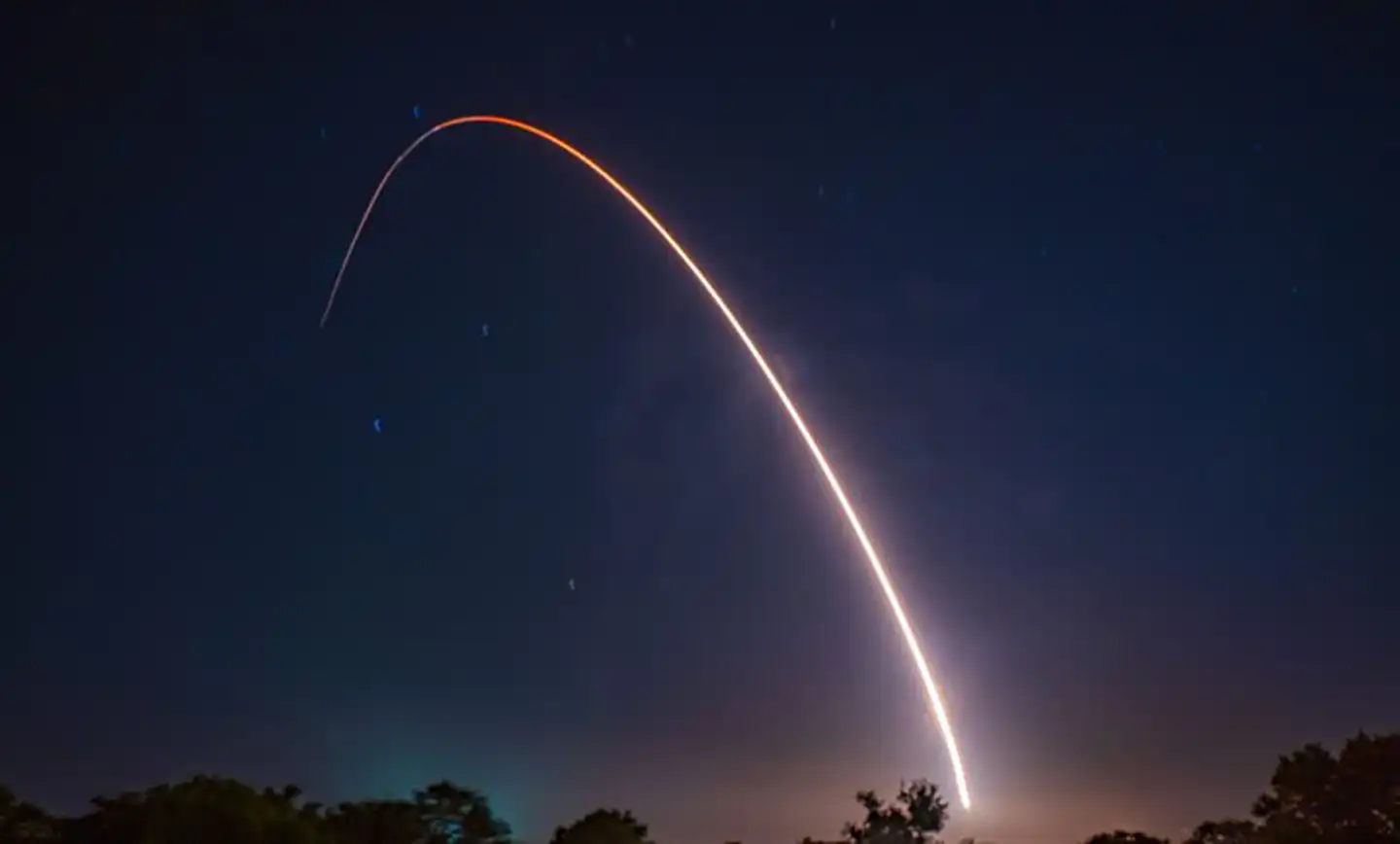
A United States-led group of more than 40 nations is calling on governments to give at least 24 hours’ notice before testing long-range ballistic missiles or launching space rockets. The alert would reduce the risk of miscalculation and unintended response, the countries said in a joint statement issued at the recent Conference on Disarmament in Geneva. The proposal reflects a broader effort by the U.S and its partners to strengthen strategic stability and reinforce the norms that support collective security.
The August 2026 action came hours before North Korea tested a ballistic missile and about a month after the Chinese Communist Party (CCP) tested a submarine-launched ballistic missile in the South Pacific, according to the Stars and Stripes newspaper.
The statement urged governments — particularly nuclear-weapon states — to notify potentially affected countries before launching intercontinental ballistic missiles, submarine-launched ballistic missiles and space-launch vehicles. “Recent missile-testing activity in the Pacific area did not follow the standard practices adopted by most states to notify and deconflict [such] launches,” the statement said.
The CCP told Australia, Japan, New Zealand and Papua New Guinea several hours before the July 2026 launch, according to Stars and Stripes. In the Geneva statement, the nations called that time frame insufficient and requested additional information for such tests, including the type of missile or rocket, launch area and flight direction. The statement said governments should also issue clear warnings for aircraft and ships near potential impact areas. More transparent notification practices can help reinforce responsible use of nuclear power.
The Hague Code of Conduct Against Ballistic Missile Proliferation (HCoC) comprises 140 countries, including Russia. The HCoC includes the voluntary commitment to provide prelaunch notification, according to Stars and Stripes. Iran, Israel, North Korea, Pakistan and the People’s Republic of China (PRC) do not participate in the HCoC. The CCP, which is undergoing a massive build-up of its nuclear weapons program, has repeatedly rebuffed U.S. efforts to engage in nuclear arms-control dialogue, according to Reuters. The CCP also rejected the 24-hour notice statement.
The CCP’s July 2026 test launch differed fundamentally from how the U.S. conducts ICBM tests, an expert told Newsweek magazine.
“Similar U.S. tests in the Pacific do not cross over island states traveling from the U.S. West Coast to the Marshall Islands. These do not inhabit island space the same way the Chinese test did,” Robert Underwood, director of the Pacific Center for Island Security think tank, told the magazine in August 2026.
The nine nuclear-armed nations include five officially recognized under the Nuclear Nonproliferation Treaty: France, the PRC, Russia, the United Kingdom and the U.S. The other four countries developed nuclear arsenals outside the NPT framework: India, Pakistan, North Korea and Israel.
In addition to the U.S., the signatories of the August 2026 statement are Albania, Australia, Austria, Belgium, Bulgaria, Canada, Croatia, Czechia, Denmark, Estonia, Finland, France, Germany, Greece, Hungary, Iceland, Italy, Japan, Latvia, Lithuania, Luxembourg, Marshall Islands, Montenegro, Netherlands, New Zealand, North Macedonia, Norway, Palau, Philippines, Poland, Portugal, Republic of Korea, Romania, Slovakia, Slovenia, Spain, Sweden, Türkiye, Ukraine and the U.K.