


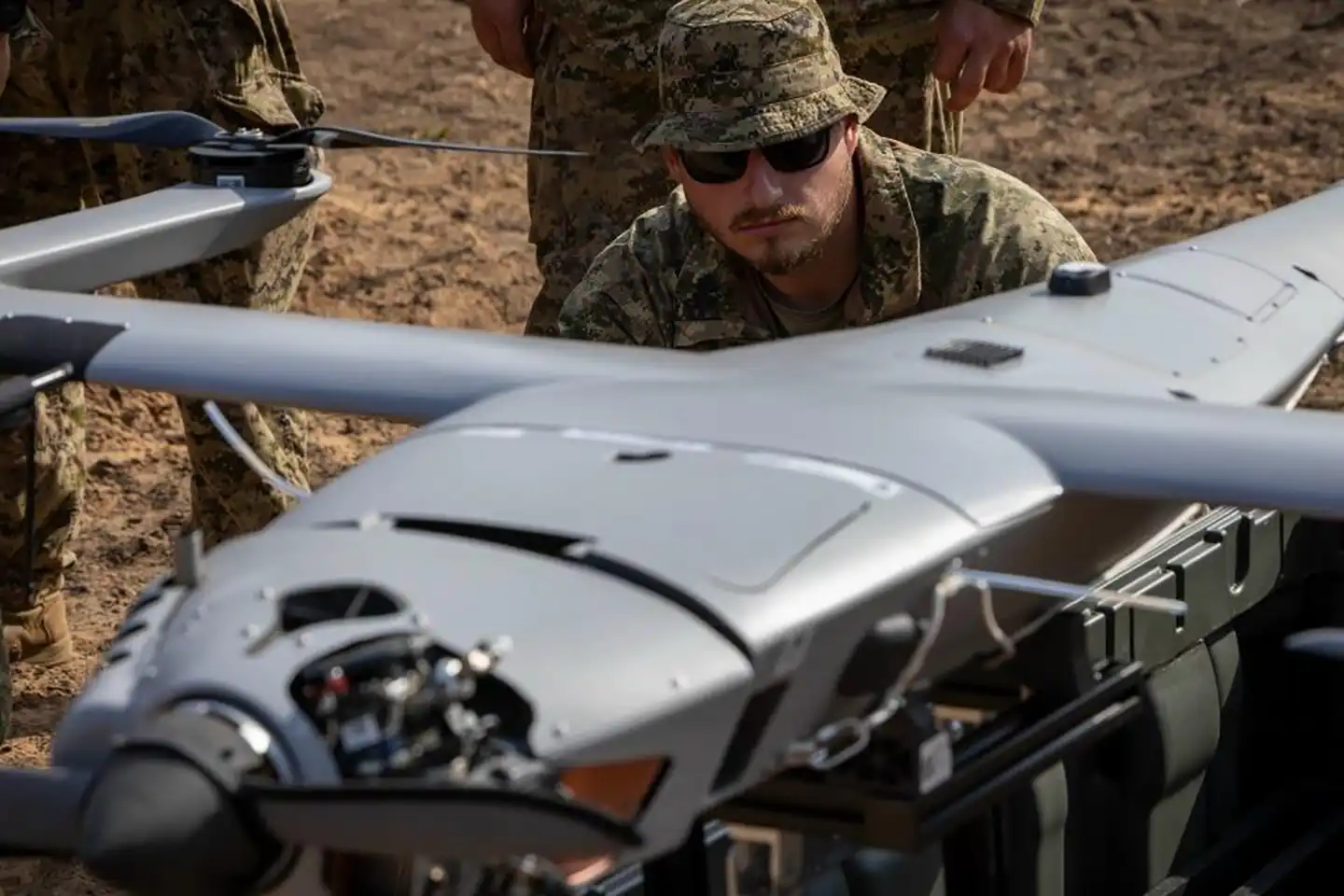
In August 2026, NATO Allies and partners gathered in Jaunzemi, Latvia, to test emerging technology that enables disparate systems to work together to defend against threats from unmanned aerial systems (UAS). Baltic Trust brought together 650 personnel from 24 nations, combining military training, operational experimentation and cooperation with industry to explore how emerging capabilities can be integrated into a coherent fighting system, according to a NATO news release. Participants included service members as well as software engineers and other civilian technical professionals.
Baltic Trust placed emerging technology in the hands of military operators and exposed it to a threat-informed environment shaped by contemporary warfare. Soldiers faced realistic UAS tactics while operators, engineers and industry specialists assessed how systems performed in the field. This let participants identify systems’ strengths and weaknesses before using them in conflict.
During a real battle, thousands of such relatively cheap drones can rapidly cross national borders, and a military can afford only so many expensive interceptors. NATO Allies are developing systems to counter those threats without expending expensive missile systems.
“There is a deliberate attempt to exhaust our exquisite capabilities, expending them on cheap Shahed drones,” British Army Maj. Paul Gromley, a Royal Signals officer working with NATO’s Allied Land Command, said in a U.S. Army news release. Winning means putting the right defense on the right threat, fast — “and that can only happen if it’s underpinned by a network infrastructure, a data backbone that allows for the passage of data at the right speed to enable the right decision-making.”
A successful test is not just a win for the hardware but also for data. The counter-drone system had to see the incoming target, identify it as a threat, track it precisely enough to hand the interceptor a firing solution and do it quickly enough that the attacking drone was met with the appropriate defense.
“The security of the data, the compliance of the data, the trust of the data — that is something which can be complex,” Jean Vanhay, a counter-drone software engineer with the NATO Communications and Information Agency, said in the news release.
Battlefield lessons learned from Ukraine’s fight against Russian attacks have provided a trove of data that Allies are leveraging to develop a strategic advantage, Gromley said. The challenge is incorporating the data into systems that are interoperable among NATO’s member nations.
To solve the problem, engineers built a common language that allows sensors to communicate. The language is based on Sensing for Asset Protection with Integrated Electronic Networked Technology (SAPIENT), developed by the Defence Science and Technology Laboratory in the United Kingdom. SAPIENT is now moving through NATO’s multiyear process to become an Alliance-wide standard, according to the U.S. Army news release. It lets a jammer, radar and command system made by different manufacturers push their information into one place. In earlier NATO trials, it linked more than 70 different systems; in some cases, the connection worked the instant the system was plugged in.
“Normally they cannot interoperate with each other,” said Ola Timmers, a Dutch software engineer with the NATO Communications and Information Agency. “Here we connect all these sensors, these jammers, and also the command systems to this protocol so they can communicate. We’re now able to do a full task lifecycle in one go.”